
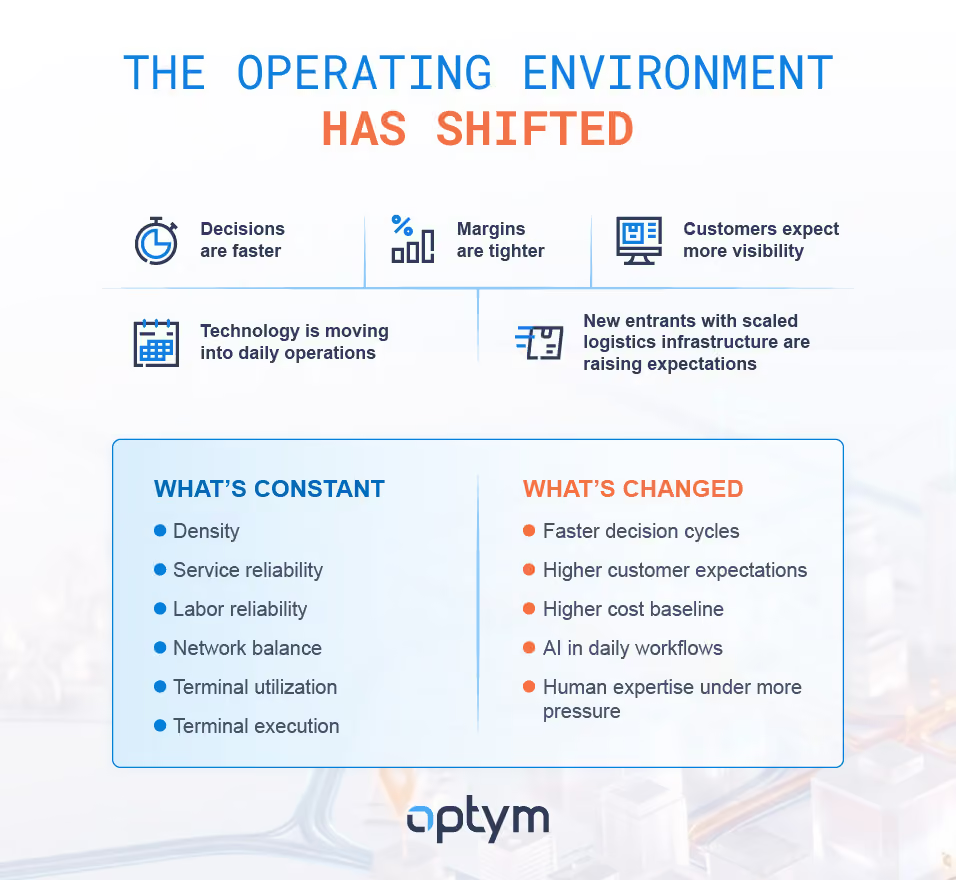
For decades, LTL carriers have competed on the same hard fundamentals: density, service, labor productivity, network balance, trailer utilization, and terminal execution.
Those fundamentals have not changed. The environment around them has.
This is not another market cycle. It is a new operating era.
The carriers that win will not be the ones that simply “add technology.” They will be the ones that use technology to become measurably better at the work that has always mattered.
The common thread is decision quality
In this next era, LTL performance will increasingly depend on how quickly and consistently carriers make the right operational decisions across the network.
People are still the operating system
For all the technology entering LTL, the industry still runs through human handoffs.
Dispatchers, dock supervisors, planners, drivers, and terminal leaders still hold the practical knowledge that makes an LTL network work.
The best technology does not replace that knowledge.
It helps apply it more consistently. It gives people better options, better visibility, and better timing.
That distinction matters.
The new operating era is not a story about removing people from the network. It is a story about giving people better decision systems in a market that gives them less time and less room for error.
The executive question
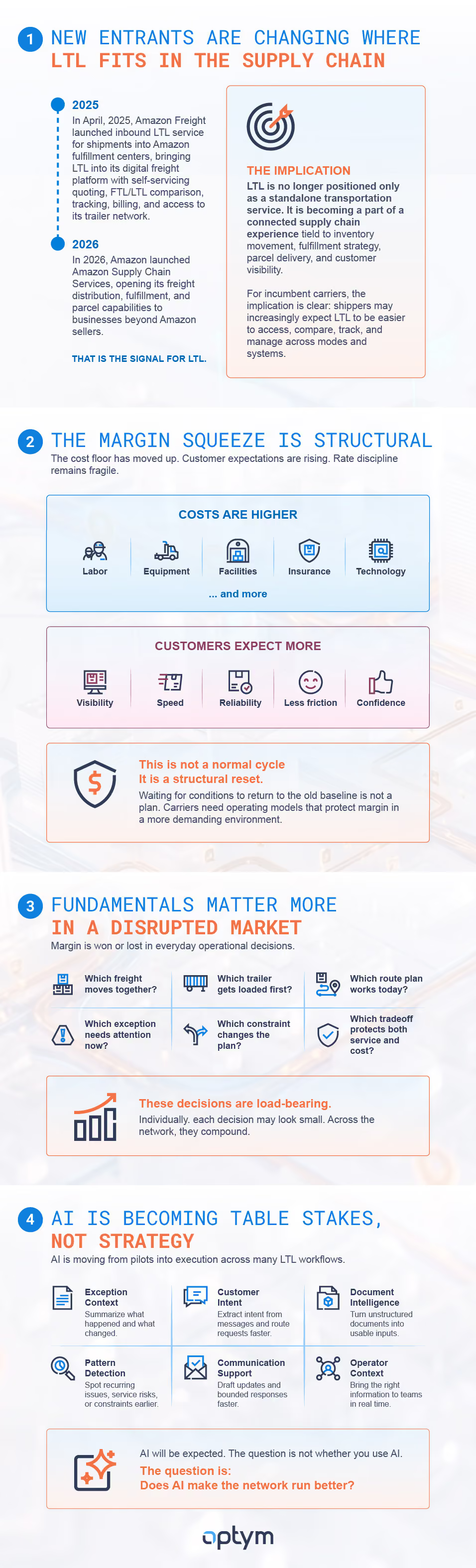
The LTL industry is being reshaped by new entrants, higher costs, tighter service expectations, fragile pricing discipline, and the normalization of AI.
But the leadership question is not, “What technology should we buy next?”
It is, “Where are we still making critical decisions too slowly, too manually, or too inconsistently?”
That is where the opportunity is.
The next era of LTL will not be won by chasing every new trend. It will be won by carriers that use technology to strengthen the fundamentals: better decisions, better planning, better execution, better network discipline, and better use of human expertise.
The future of LTL will be built on the industry’s old foundations and not around them.