For years, final mile was treated as a routing problem.
Improve route sequence. Reduce miles. Increase stop density. Minimize drive time.
That approach worked when networks were simpler. But final mile has changed.
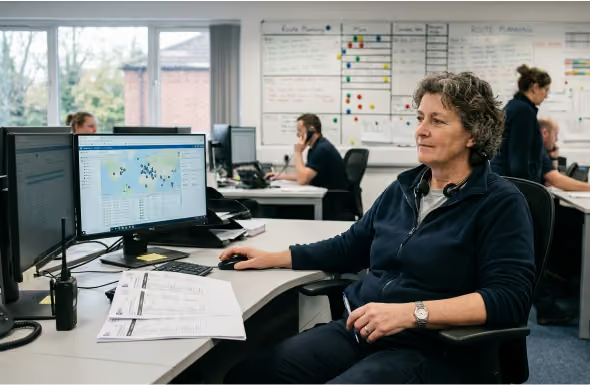
Today’s operations are managing far more than standard home delivery. In the same market, on the same day, teams may be handling threshold delivery, room of choice, white glove service, installation, haul-away, returns, and re-delivery. Often, all of it runs through the same fleet and labor pool.
That changes the game. In modern final mile, performance is no longer defined by route efficiency alone. It is defined by how well an operation can handle complexity at scale. Routing still matters, but it is now one part of a much larger operating challenge.
The most successful networks are not just building efficient routes. They are building plans that are feasible, resilient, and aligned to the service promise.
The mindset shift final mile needs
The old question was:
What is the shortest, fastest route?
The better question today is:
What is the best plan to deliver the promised service reliably in the real world?
That shift matters because final mile is no longer just about moving orders from point A to point B. It is about aligning service requirements, resource capability, and day-of execution.
A truck is not just capacity. It is capability.
A crew is not just available labor. It may need the right training, equipment, certifications, or setup to complete the job.
So the closest vehicle is not always the right one. And the shortest route is not always the best plan.
The ‘Final Mile Reality Stack’
To manage final mile well, operators need a broader framework than routing alone.
At Optym, we see this as the Final Mile Reality Stack — the layers of operating reality that shape performance before routing can create value.
It starts with:
- service promise
- rules and constraints tied to that promise
- resources and capabilities available to deliver it
- variability that affects execution
- decisions required throughout the day
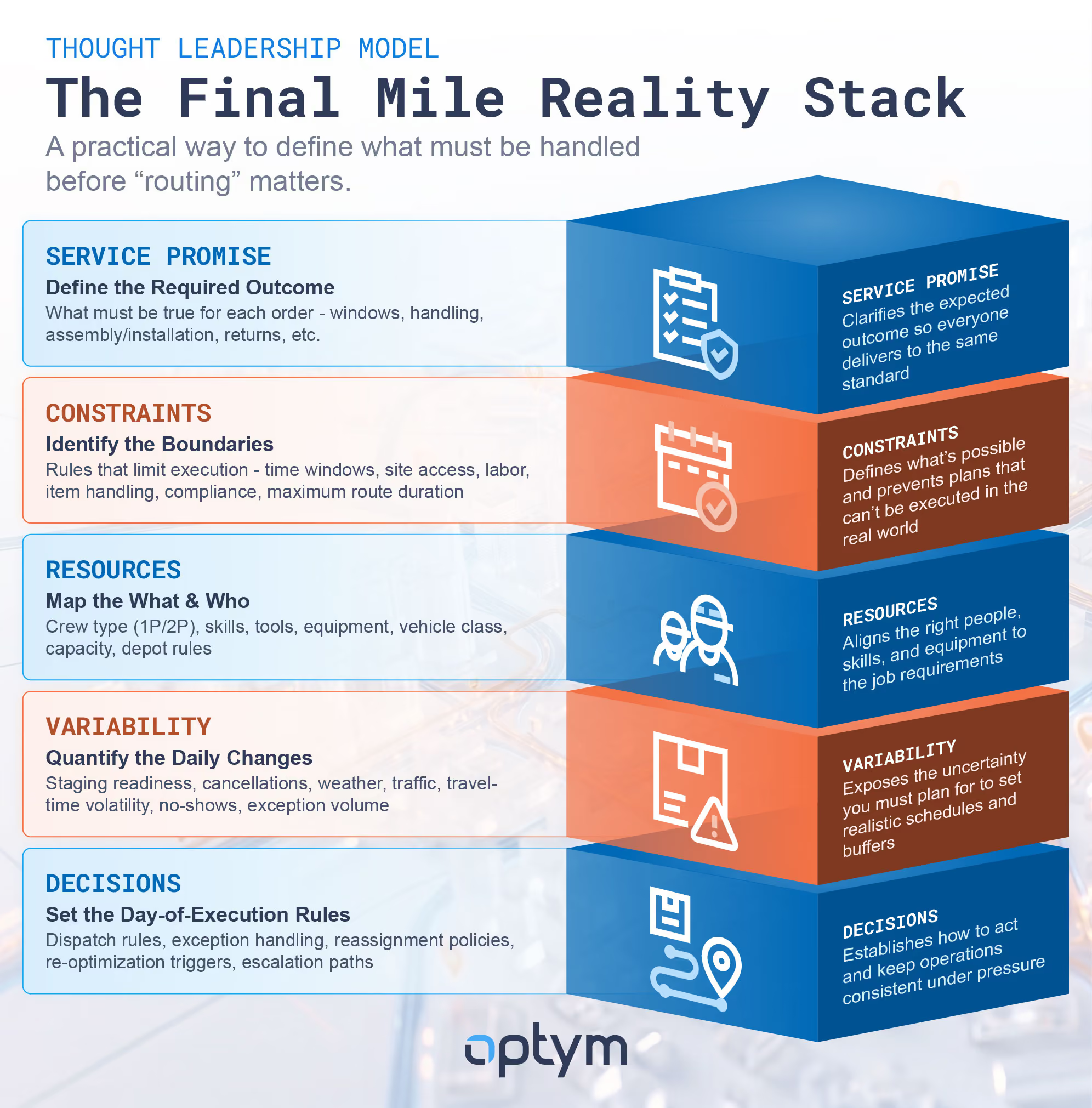
This is the key insight: Routing sits inside the decision layer. It is important, but it is not foundational.
The foundation is operating reality itself.
If service requirements are not understood, if resources are mismatched, or if the plan cannot adapt once the day begins, routing alone cannot fix the outcome.
A new way to think about final mile performance
The next era of final mile will not be defined by who builds the shortest routes. It will be defined by who can optimize the full operating model rapidly and across scale.
The strongest networks will optimize for service feasibility, execution resilience, customer outcomes, and operational efficiency at the same time. They will be designed to absorb variability, protect service integrity, and scale without constant manual intervention.
Better route sequence, fewer miles, higher stop density, and lower drive time are not enough. Optimization only works when it accounts for the Final Mile Reality Stack.