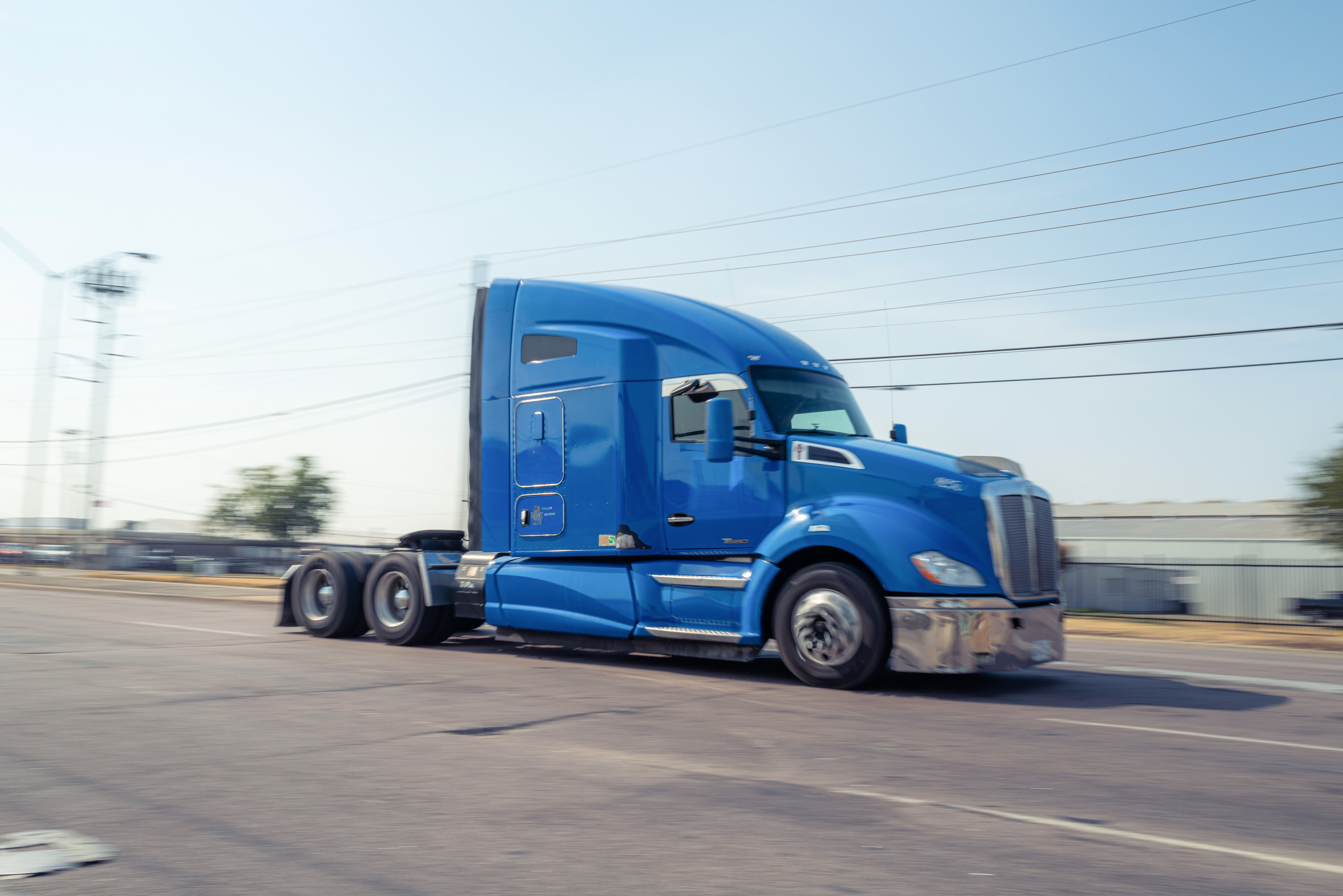
When third- and fourth-generation leaders Rob Estes (CEO of Estes) and Webb Estes (President & COO of Estes) took the center stage at Optym’s LTL Convergence Conference in Dallas in November 2025, the audience didn’t just hear a keynote talk, they witnessed a living case study of how a 95-year-old carrier continues to evolve through data, people, and AI-powered optimization.
Estes Express Lines has weathered every cycle the LTL industry could throw at it — regulation and deregulation, recessions and surges, manual docks and digital twins. Yet, the company continues to grow and flourish, guided by the same principle that’s carried it since 1931: efficiency powered by innovation. Nine and half decades later, that efficiency now runs on Optym’s AI-driven planning and optimization technology, which helps Estes adapt faster, plan smarter, and move freight more sustainably than ever before.
From Punch Cards to Real Time: The Evolution of Efficiency
“I wasn’t around in 1931,” Rob joked, “but I can tell you there wasn’t much technology then. Today, technology drives what we do.” He’s lived that transformation first-hand from sorting IBM punch cards in the 1970s to managing digital networks with near-real-time visibility today.
Estes’ operational philosophy has always been simple: adapt fast, stay lean, and never stop improving. When deregulation hit in 1980, Estes learned the art of “lean before lean was popular.” Over the decades, the company has invested in smarter planning, sustainable operations, and continuous modernization using technology not as a replacement for people, but as a multiplier for their performance. “The carriers that use technology well win,” Rob said. “That’s why we partner for capabilities that are better built by specialists and keep our secret sauce in-house.”
A Future That Keeps Moving: Webb’s Framework for Modern LTL Operations
If Rob is the historian, Webb is the field general. His framework for the next era of LTL leadership is built on four pillars: Flexibility, Data, Sustainability, and People.
1. Flexibility
“Every day starts at Estes with zero shipments,” Webb said. “We may pick up 50,000 shipments that day, but no customer guarantees those. The plan has to flex.” Using Optym’s AI-powered driver, routing, and real-time linehaul planning tools, Estes now creates dynamic plans that can be re-optimized throughout the day — reacting to weather, traffic, and last-minute changes.
That flexibility has paid off: route miles are down, while driver utilization and on-time pickups have improved. “The trick,” Webb added, “is giving teams a solid plan and letting them hold it loosely. With the right tools, we can pivot without chaos.”
2. Data
Webb didn’t mince words: “Customers tell us we failed before we even know we failed.”
Estes’ response: build a data-first culture where visibility is instantaneous, not retrospective. Working with Optym, Estes has expanded its data capture and analytics capability, feeding insights from every truck, terminal, and dock into a unified model. The result? Planners make decisions faster, and exception alerts surface issues before they hit the customer. “We used to throw out messy data,” Webb said. “Now we use technology to clean and learn from it.”
3. Sustainability
Few in trucking talk about sustainability as candidly as Webb. “We bought natural gas trucks — then were told they were worse than diesel. It’s messy,” he said. But the greenest move Estes has made wasn’t in fuel type — it was in reducing miles through smarter optimization. “Oddly enough, the most sustainable thing we did was the thing we’ve always wanted: run fewer miles,” Webb said.
Through route and linehaul optimization, Estes has been able to cut total network miles, translating to a reduction of CO₂ emission — proving that sustainability and profitability can travel the same road. (ATA estimates that optimized LTL networks can cut CO₂ by 30 – 40% per mile — proof that smarter routing is the most impactful “green initiative” in freight.)
4. People
“I love technology,” Webb said, “but any project that forgot people failed.” For Estes, technology is only as good as its adoption. Terminal managers and drivers are deeply involved in every rollout — from route planning to handheld tools — and feedback loops are built into every implementation.
Estes’ philosophy is simple: optimization succeeds when it empowers people, not replaces them. “Culture eats strategy,” Webb said. “Treat people right, and they’ll carry the load with you — especially when the unexpected hits.”
Build vs. Buy: Why Estes Chose to Partner with Optym
For years, Estes built its own dispatch and handheld systems internally. “We thought if we built it, we’d pay once,” Webb said. “Turns out, you reinvent SaaS anyway.” That realization led Estes to deepen its partnership with Optym, integrating tools for linehaul optimization, driver planning, inbound routing, real-time orchestration, and dock scheduling. The impact:
- Planning cycles reduced
- Terminal network utilization improved
- Cross-functional visibility increased
“What I like most,” Webb added, “is our employees don’t complain about the system anymore — they tell us what they need, and Optym helps make it better.”
Culture as the Competitive Engine
Even with its scale — 24,000 employees and 50,000 shipments per day — Estes remains anchored by its culture. “In April 2020, when others were letting people go, we kept our team,” Webb recalled. “When a cyber incident hit, everyone carried a piece of the load. That’s what culture does; it shows up when you need it most.” Rob summed it up simply: “LTL is a team sport. I’d rather hire an A-minus player who thinks ‘we’ than a superstar who thinks ‘me.’”
What the Next Cycle Demands
Rob closed with perspective: “Supply and demand will normalize — eventually. The winners will still be the most efficient carriers. Distribution and consolidation will make sense again, blending truckload strengths with LTL delivery.”
For Webb, the message is about posture, not prediction. “This year we even ran empties out of Southern California,” he said. “That breaks every rule. So you set your framework and keep iterating — Flexibility, Data, Sustainability, and People. Get those right, and you can handle whatever tomorrow throws at you.”
Watch the Full Keynote Talk
Hear Rob and Webb Estes’ full conversation from Optym LTL Convergence 2025 — a 95-year perspective on freight, leadership, and how AI-driven planning is reshaping the next century of LTL at the top of this blog.
About Estes
Estes is North America’s largest privately owned freight carrier. As an asset-based transportation provider with a global footprint, Estes combines nearly a century of regional freight shipping expertise with the resources, reach, and reliability of a national carrier. Backed by its 295+ North American terminals, nearly 7,000 next-day lanes, and fleet of more than 10,000 tractors, Estes is committed to getting America's freight where it needs to go, when it needs to get there. And with its continued investment in leading-edge technology, as well as the support of its more than 24,000 employees, Estes always goes the extra mile to deliver exceptional experiences that keep its customers coming back. The carrier’s comprehensive freight shipping solutions include Less Than Truckload (LTL), Volume LTL and Truckload, Time Critical Guaranteed, Custom Shipping and Logistics, and Final Mile. From short-haul to global freight forwarding—Estes does it all.
About Optym
Optym, Inc. is a global leader in optimization and applied AI solutions for the transportation and logistics industry. For more than two decades, Optym has partnered with some of the world’s largest trucking, airline, and rail companies to solve their most complex operational challenges. Its flagship software solutions empower carriers, brokers, and fleets to maximize efficiency, increase profitability, and make smarter, data-driven decisions. Backed by deep expertise in operations research, optimization science, and machine learning, Optym builds technology that turns real-world complexity into simple, actionable workflows. With teams across the U.S. and India, Optym continues to shape the future of transportation logistics by providing innovative, scalable solutions that improve planning, visibility, and execution across the entire supply chain.